May 31, 2025
Nitrous oxide (nitrous) has been used therapeutically since the late 1800’s. Nitrous has also been used recreationally for its short-lived euphoric effects and easy accessibility. Nitrous is used as the propellent for the whipped cream canisters. The cartridge containing the nitrous is opened using a device known as a “cracker” and the nitrous is then collected in a balloon for inhalation. Occasionally users will place a bag over their head to concentrate the nitrous, and this is a primary cause of death from nitrous due to asphyxiation. Other complications from use (usually chronic) include peripheral neuropathy, myelopathy (particularly dorsal columns in spinal cord), macrocytic anemia, and occasionally encephalopathy.1 MMWR just reported a rapid rise in cases from 2019 to 2023 based on data from the Michigan poison center, Michigan syndrome surveillance system and emergency medical services (EMS responses).2 As noted by the authors, the lack of a screening test for nitrous suggests that the statewide data under-represents the number of exposures.
Nitrous oxidizes the cobalt in vitamin B12. This oxidation of the cobalt impairs the ability of the Vitamin B12 to serve as a cofactor for cytoplasmic methionine synthase and mitochondrial methylmalonyl Co-A mutase.3
Figure 1 taken from reference 3 illustrates this effect.3
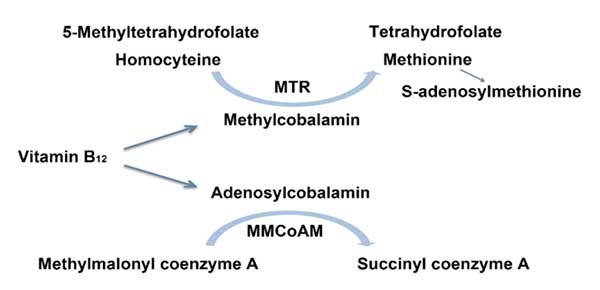
Vitamin B12 levels in these patients may remain normal as the issue is the dysfunctionality of the vitamin as a cofactor. The homocysteine and methylmalonic acid levels tend to above their reference ranges given the inadequate functioning of the methionine synthase and methylmalonyl CA mutase respectively.
Keeping a level of clinical suspicion and asking about inhalant use disorder may be key to early identification of nitrous as the culprit.
Saralyn R. Williams, MD, Professor of Emergency Medicine, Medicine, and Pediatrics
- Halleux CD, Juurlink DN. Diagnosis and management of toxicity associated with the recreational use of nitrous oxide. CMAJ 2023;195: E1075-81.
- Vohra V. Matthews H, Stroh-Steiner G. Recreational nitrous oxide misuse-Michigan 2019-2023. MMWR 2025; 74: 201-212.
- Xiang Y, Li L, Ma X, et al. Recreational nitrous oxide abuse: prevalence, neurotoxicity, and treatment. Neurotoxicity Research 2021;39: 975-85.